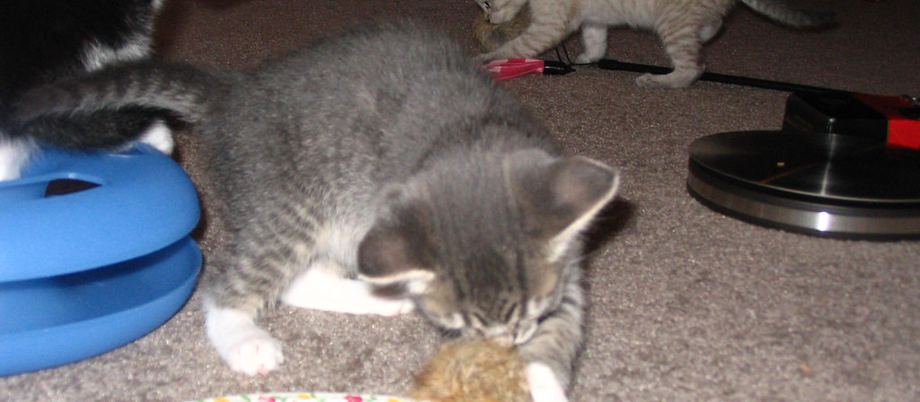
Interactive toys fight boredom — especially for indoor and solo cats. The trick is to rotate a few so they keep their novelty. These picks cover both kinds of play: the “you play together” kind and the “keeps them busy while you’re out” kind.
Top picks at a glance
Quick comparison
| Toy | Best for | Keep in mind |
|---|---|---|
| Wand teaser | Bonding play with you | Put away after use (strings) |
| Electronic motion | Solo play when you’re out | Auto-off saves the battery |
| Track ball toy | Quiet mental enrichment | Some cats lose interest |
Our picks
Wand / Teaser Toy
$ · daily exercise
What we liked
- Mimics prey for real hunting play
- Best daily workout for most cats
- Cheap and endlessly re-usable
Keep in mind
- Needs you to play with it
- Put it away after use (loose string)
SmartyKat Electronic Concealed Motion Toy
$ · solo play
What we liked
- Randomized motion under a fabric cover
- Auto-off to save the batteries
- Triggers the hunt-and-pounce instinct
Keep in mind
- Runs on batteries
- Some cats lose interest over time
Petstages Tower of Tracks
$ · no batteries
What we liked
- Three-tier ball track for batting play
- No batteries, quiet for apartments
- Good solo enrichment between sessions
Keep in mind
- Some cats lose interest
- Balls stay captive, less chase
How to choose
Match the toy to your cat’s play style — some are chasers, some pouncers, some batters — and rotate a small set weekly so nothing gets stale. Always supervise wand and string toys and put them away afterward, since loose string is a swallowing hazard. A few minutes of real hunting play a day does more for a bored indoor cat than a basket of toys they ignore.
FAQ
How do I keep my cat interested in toys?
Rotate a small set weekly and put the rest away. Novelty is what keeps toys exciting.
Are wand and string toys safe?
Only with supervision. Put them away after play — loose string is a serious swallowing hazard.
How much play does a cat need?
A couple of short, active sessions a day beats a basket of toys they ignore.